We solve the problems other approaches create.
Real engagements, told the way clients experience them: the problem, the usual playbook, and the simpler way we solved it. Every screen is rebuilt from those engagements with synthetic data, so we can show the work without exposing a client.
Progress over process
Four beliefs run through every engagement below. They are also why our projects ship in weeks while others are still scheduling workshops.
The simplest method that works
Others sell methodology theater: frameworks, councils, and 18-month roadmaps. We find the simplest path through a complex problem and ship it.
With your IT team, not against it
We extend the platforms and models your team already runs. No parallel stack, no shadow IT, no turf war.
Star schemas, not extra layers
Your existing star-schema models are still the best reporting foundation there is. In representative modernization work, bolt-on reporting layers can add roughly 40% overhead and are increasingly incompatible with AI.
AI as the performance fix
Our AI-based reporting strategy tunes models, aggregations, and refresh from real query patterns. Dashboards get faster, and the same model becomes AI-ready.
The problem, their way, our way
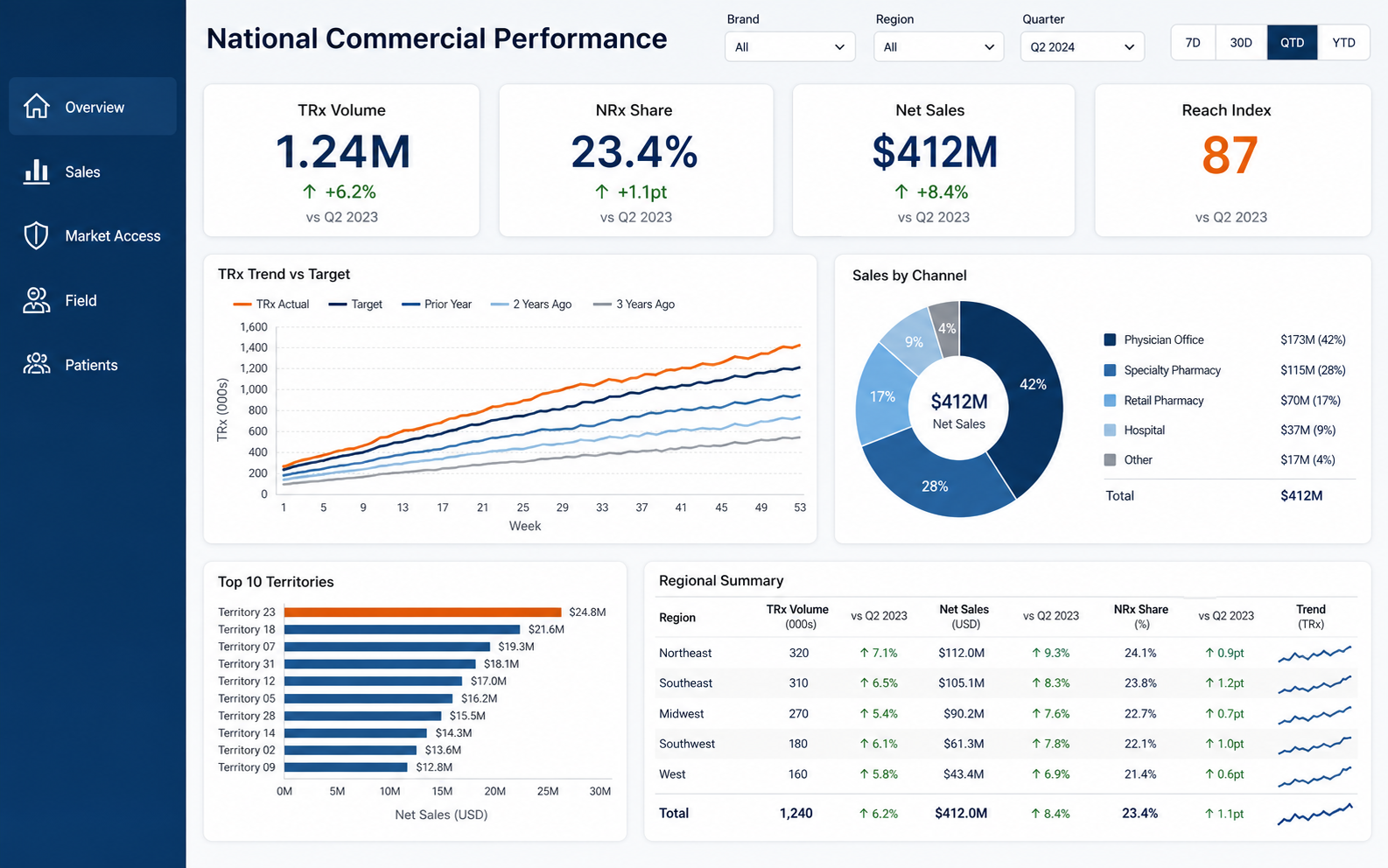
One version of commercial truth
A brand team was running weekly commercial reviews from a dozen conflicting extracts. Every number had to be re-verified before it could be trusted, and adding a single new metric took a quarter.
The usual approach
A full BI transformation: a new reporting layer on top of the warehouse, governance councils, migration workstreams, and an 18-month roadmap before the brand team sees a single trustworthy number.
How we solved it
We worked alongside the client's IT team and built directly on the star schema they already maintained. Metrics were defined once, validated on the model itself, and the first governed dashboards shipped in six weeks. No new layer, no re-platforming, and no representative 40% bolt-on overhead.
Access shifts, seen the week they happen
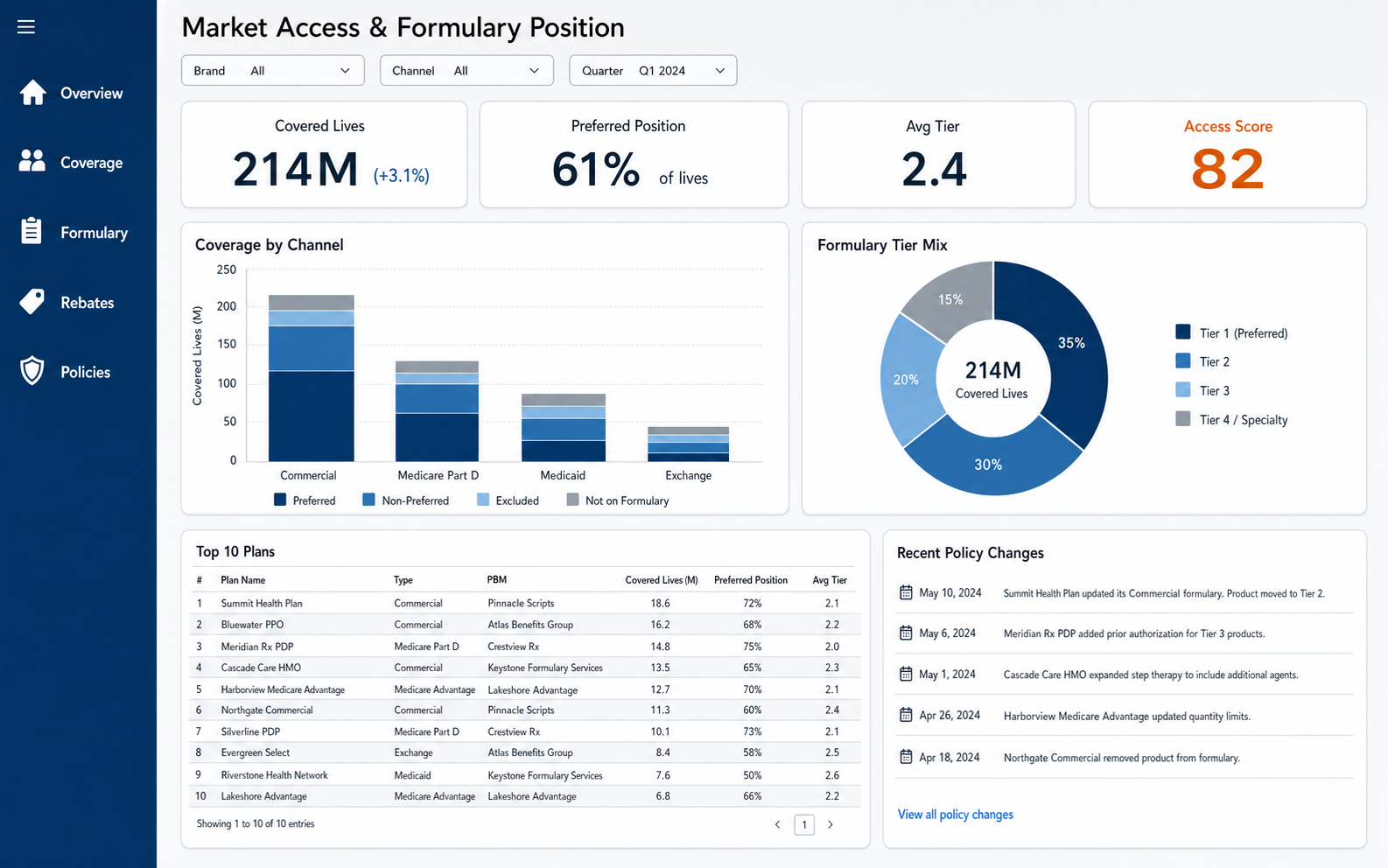
Formulary and policy changes were surfacing at the quarterly business review, weeks after they had already hit demand. The access team was maintaining payer trackers by hand.
The usual approach
Buy a standalone payer data mart from a niche vendor: another copy of the data, another contract, another integration project, and access data that still lives apart from demand data.
How we solved it
We folded payer and policy feeds into the existing warehouse star schema, joined access position directly to demand, and put a policy-change feed on the same dashboard the brand team already opens every morning.
The executive dashboard that took three minutes to load
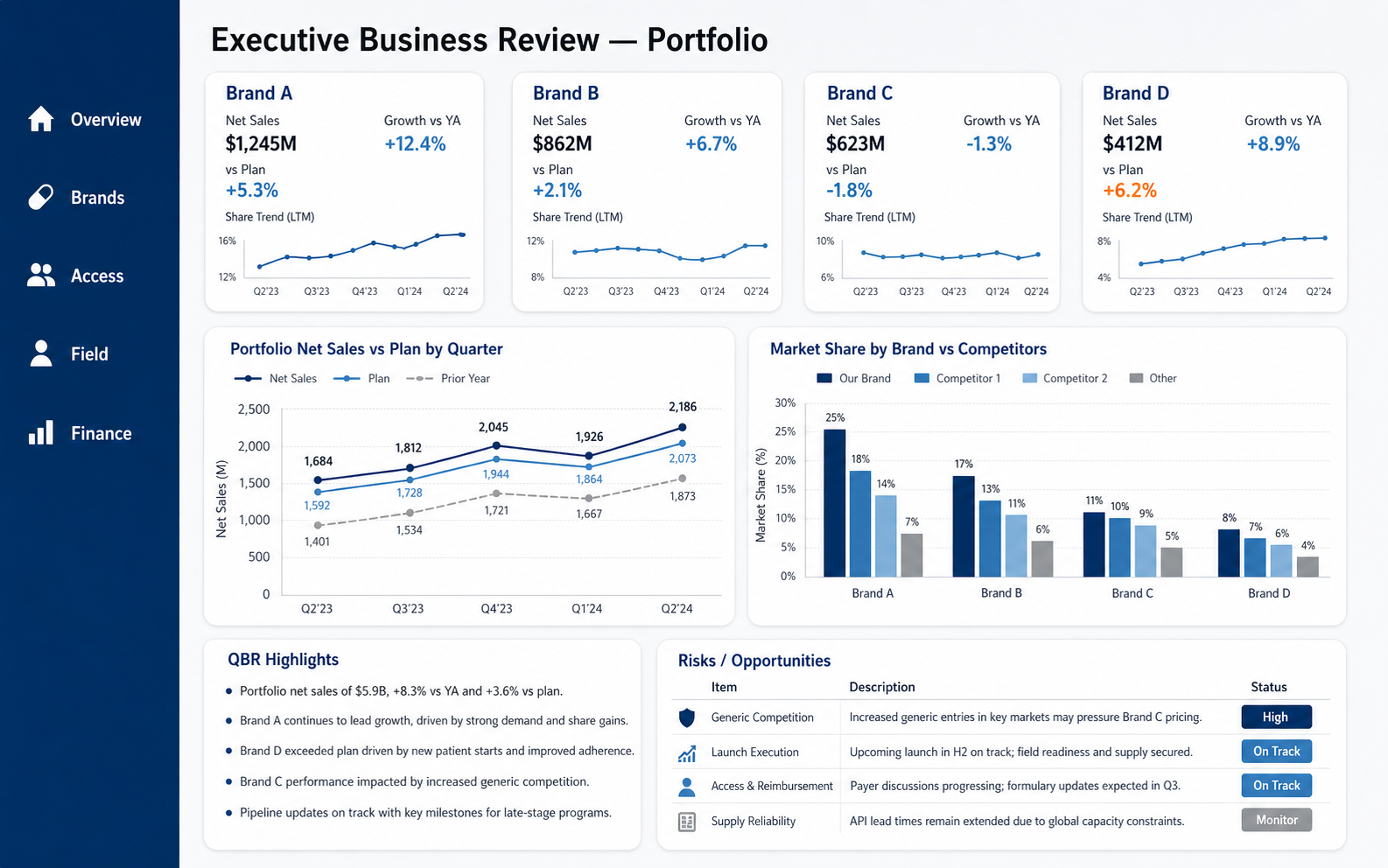
A portfolio review dashboard had grown so slow that leadership stopped opening it and analysts went back to exporting Excel. The instinctive diagnosis was that the warehouse could not keep up.
The usual approach
Add another product: a caching tier or a bolt-on reporting layer between the warehouse and the dashboards. More licenses, more overhead, and a stack that natural-language AI cannot read.
How we solved it
Our AI-based reporting strategy went the other way. Agents analyzed real query telemetry, redesigned the aggregations and refresh schedule on the existing star schema, and trimmed the model back to what the business actually asks. The warehouse was never the problem.
Natural-language analytics without the rip-and-replace
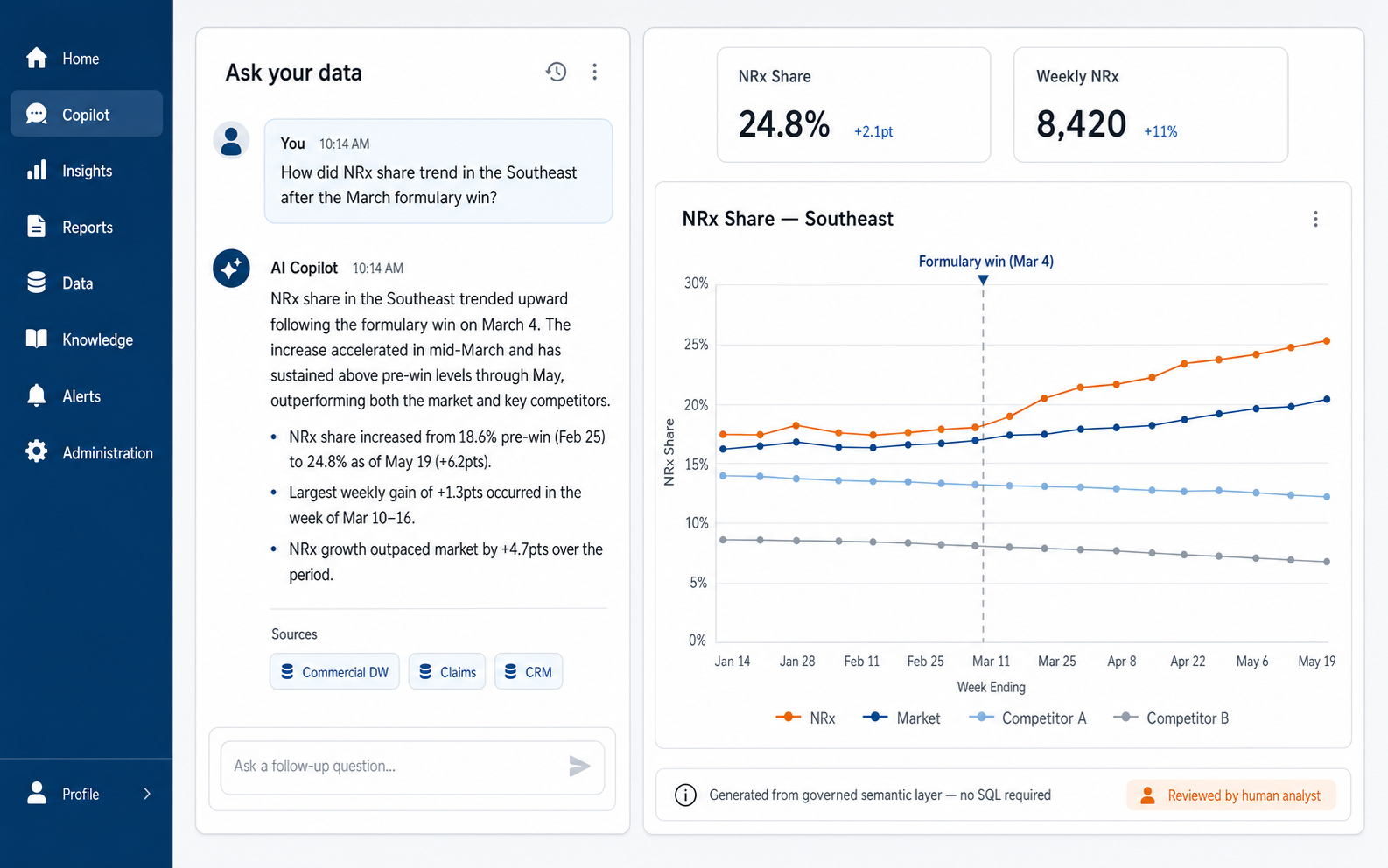
The client wanted brand teams to ask their data questions in plain English. The vendor proposal on the table required re-modeling everything into a proprietary semantic layer first: a year of work before the first question could be asked.
The usual approach
License a semantic-layer product, re-model the warehouse into it, and lock the company into a proprietary format that adds overhead to every future report and every future AI initiative.
How we solved it
We grounded natural-language agents directly in the governed star schema, because a clean star schema is exactly what AI reads best. Human review gates every answer. The existing models, and the IT team that owns them, stayed at the center.
The same discipline, across the commercial model
Representative rebuilds from other engagements: field execution, gross-to-net, launch, patient services, and the AI monitoring layer.
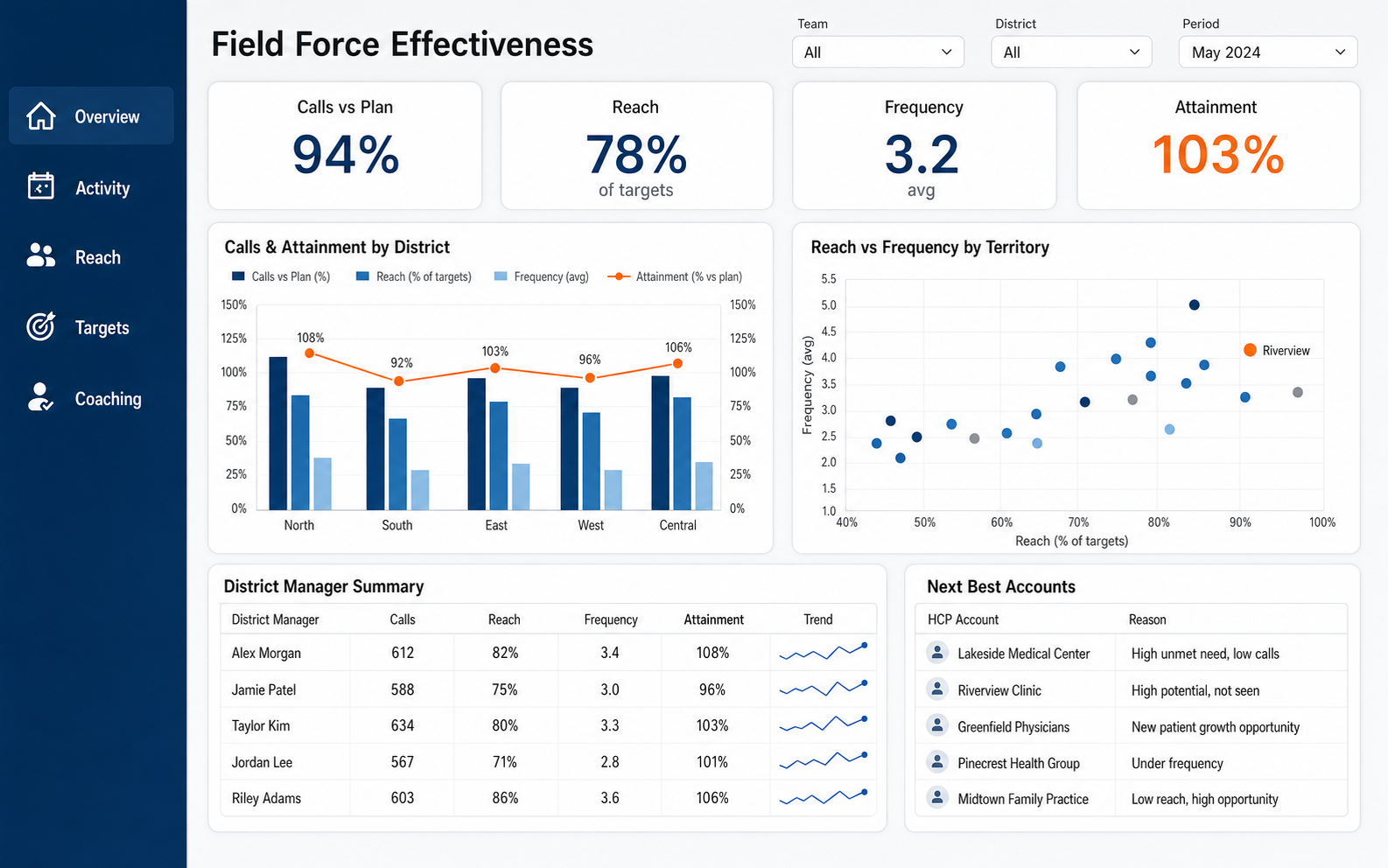

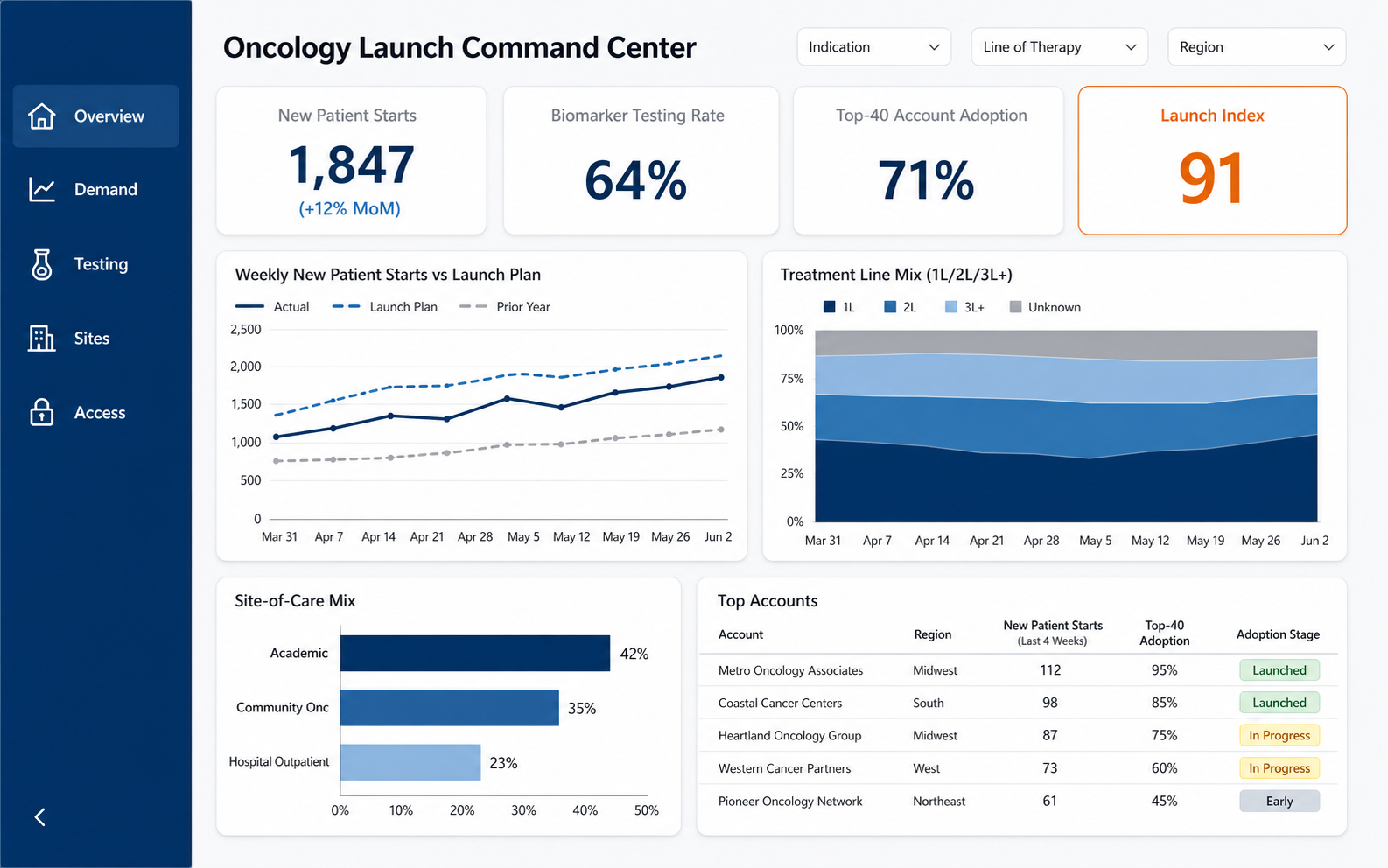
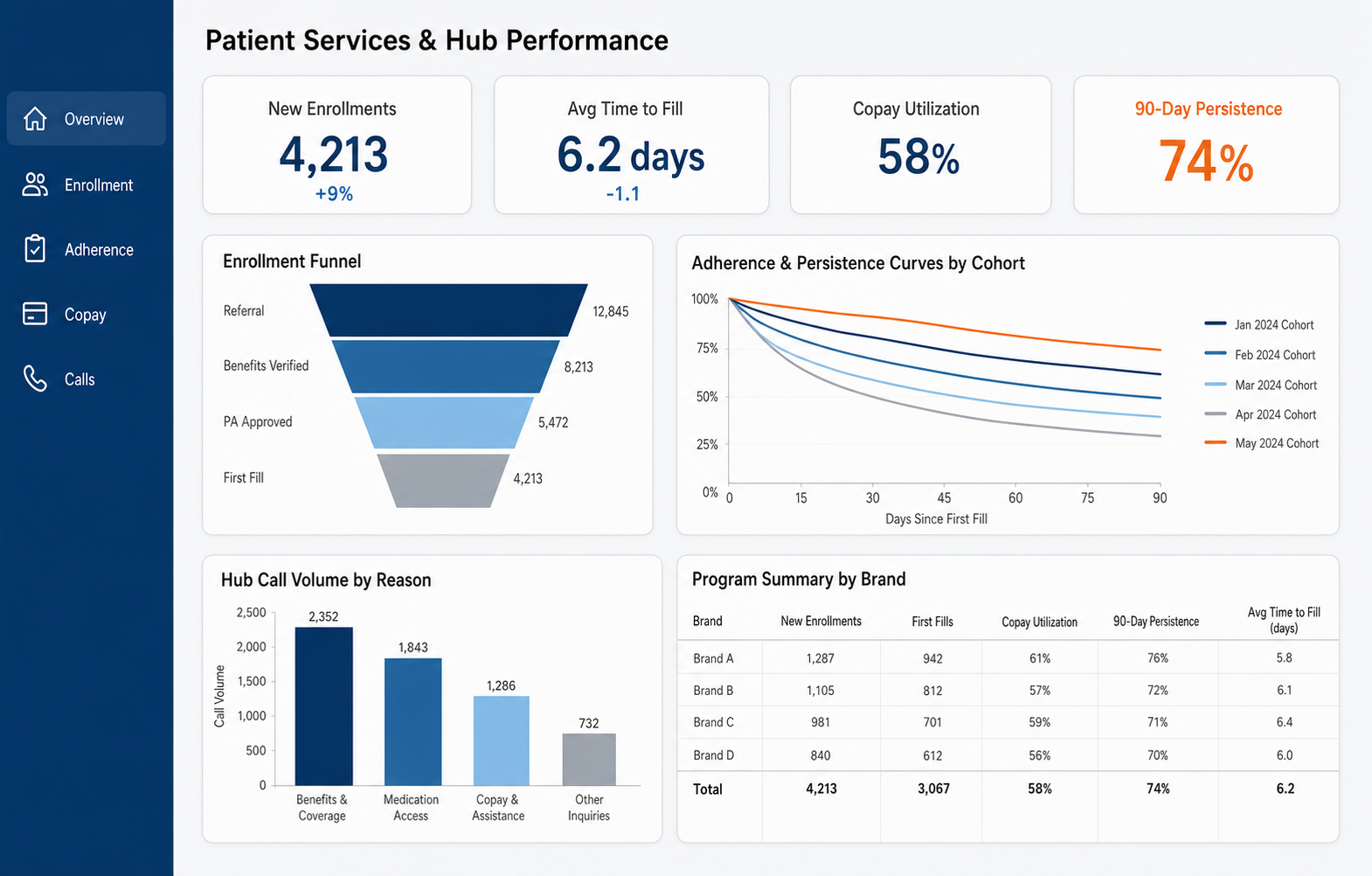
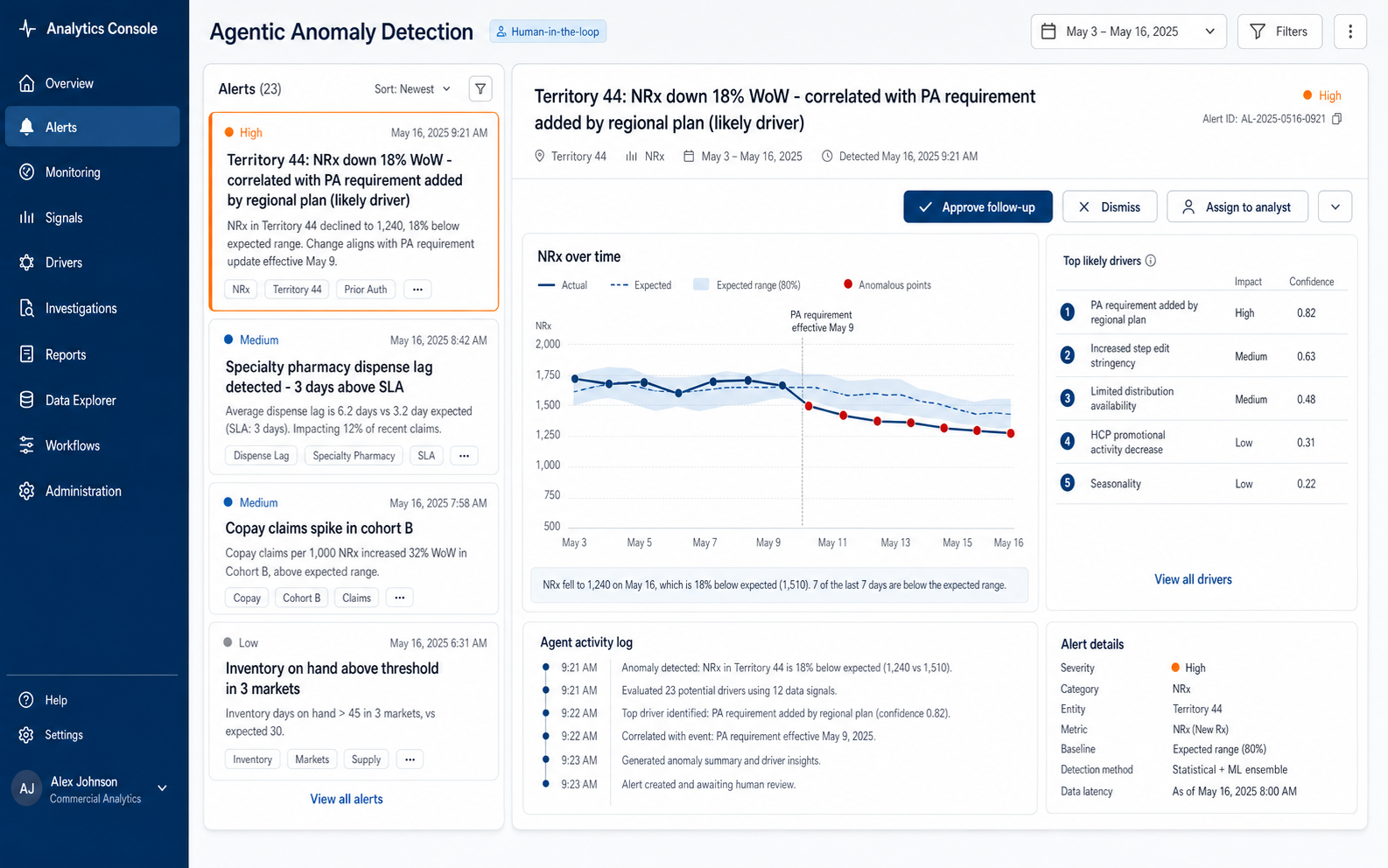
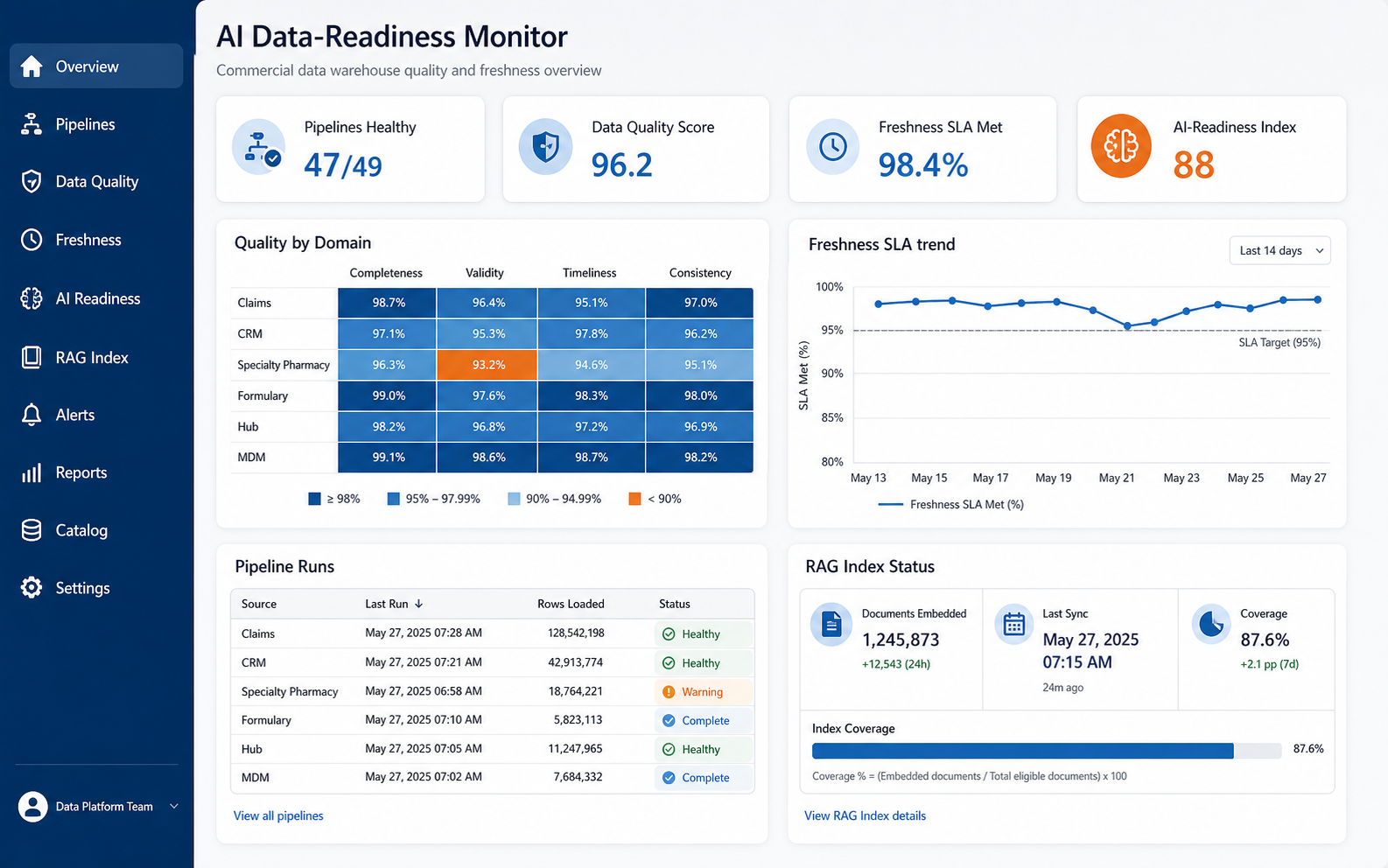
Rebuilt from real client work with synthetic data. No client data or identities are shown.
Bring us the problem everyone else made complicated.
We will show you the simplest path through it, on the models and teams you already have.